Wood privacy fences in Jacksonville
A 6 foot wood privacy fence is the default back yard fence in Duval County, and for good reason: it is the cheapest way to stop seeing the neighbor's trampoline. The trade-off is upkeep. Wood in Florida needs the posts done right and a sealer every so often.
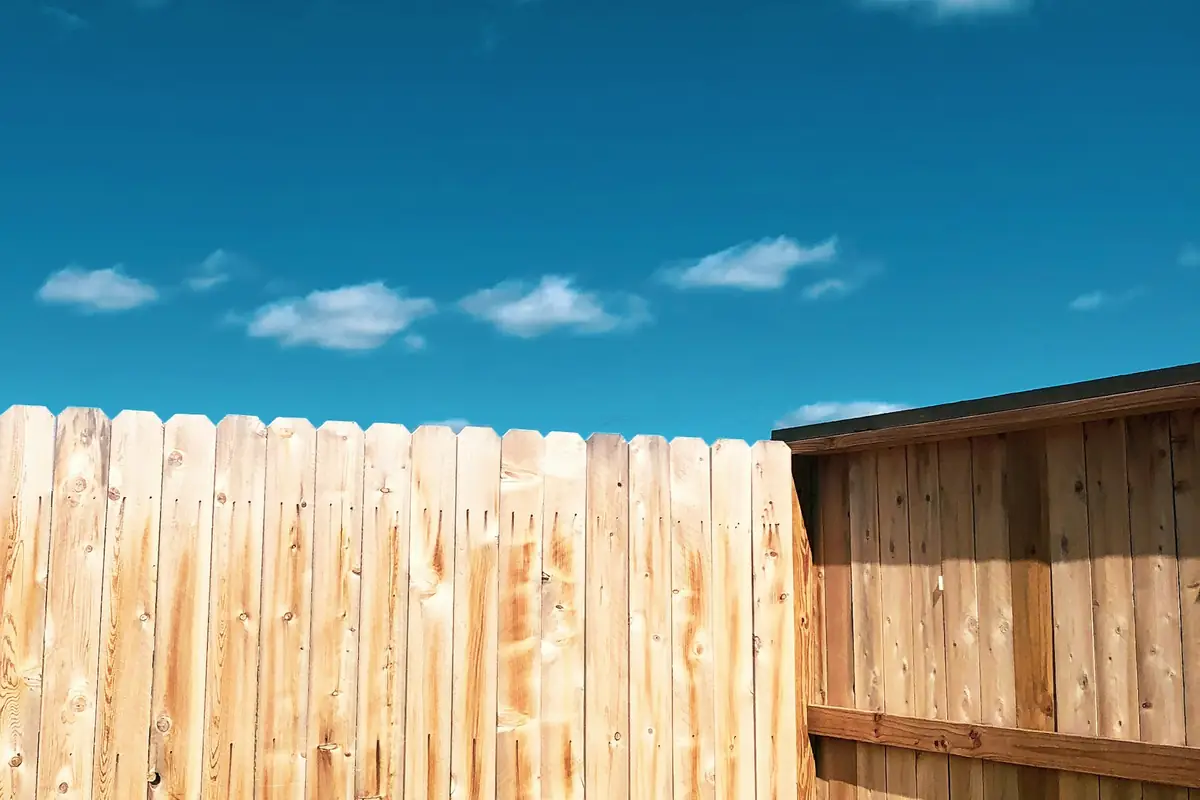
The common styles
- Dog-ear. Pickets with the top corners clipped, nailed side by side to rails. The least expensive privacy style and the one you see most.
- Board-on-board. Pickets overlap on alternating sides, so there are no gaps even after the boards shrink. More wood, more money, more privacy.
- Shadowbox. Boards alternate sides with a gap between them. It looks the same from both yards and lets some wind through, which helps in a storm.
- Cap and trim. A flat cap board across the top and a trim strip under it. It sheds water off the end grain of the pickets.
What it costs
| Job | Published range | Source |
|---|---|---|
| Wood, per linear foot installed | $15 to $35 | Fixr, Jan 2025 |
| Composite, per linear foot installed | $22 to $40 | Fixr, Jan 2025 |
Fixr, updated January 2025. National installed ranges per linear foot.
Board-on-board and cap-and-trim sit toward the top of the range because they use more lumber and more labor per foot. Height matters too: an 8 foot fence is allowed in Jacksonville back yards, but it means longer posts and more wind load.
Making wood last here
Wood fences in Northeast Florida rarely fail at the pickets. They fail at the bottom of the posts, where wet sandy soil meets the wood. Three things help. Ask for posts rated for ground contact. Ask how deep they go. And keep sprinklers and mulch off the base of the fence, since a post that stays wet rots first.
Pickets will gray in a year or two if left alone. That is cosmetic. A stain or sealer slows it and keeps the boards from cupping, and it is a job many homeowners do themselves.

Before you pick wood
Check your HOA first. Some neighborhoods in Nocatee, Oakleaf and Fleming Island specify the style, the height and even which side of the fence faces out. The "good side out" question comes up in older neighborhoods too, so ask the fence company which way the rails will face before the posts go in.
Questions Jacksonville homeowners ask
How long does a wood fence last in Florida?
It depends mostly on the posts. A well-built fence with ground-contact posts set deep, kept dry at the base and sealed now and then lasts far longer than a builder-grade fence with shallow posts. Ask for the post spec in writing.
Which side of the fence faces my neighbor?
Many HOAs require the finished side to face out, toward the street or the neighbor. If there is no HOA rule, it is your choice. Settle it before the posts go in.
Is board-on-board worth the extra cost?
If privacy is the point, often yes. Pickets shrink as they dry, and a single-layer fence can open up gaps. Overlapping boards keep the view blocked.